Flight Control, Power Distribution and Data-Link Planning in Modern UAV Builds
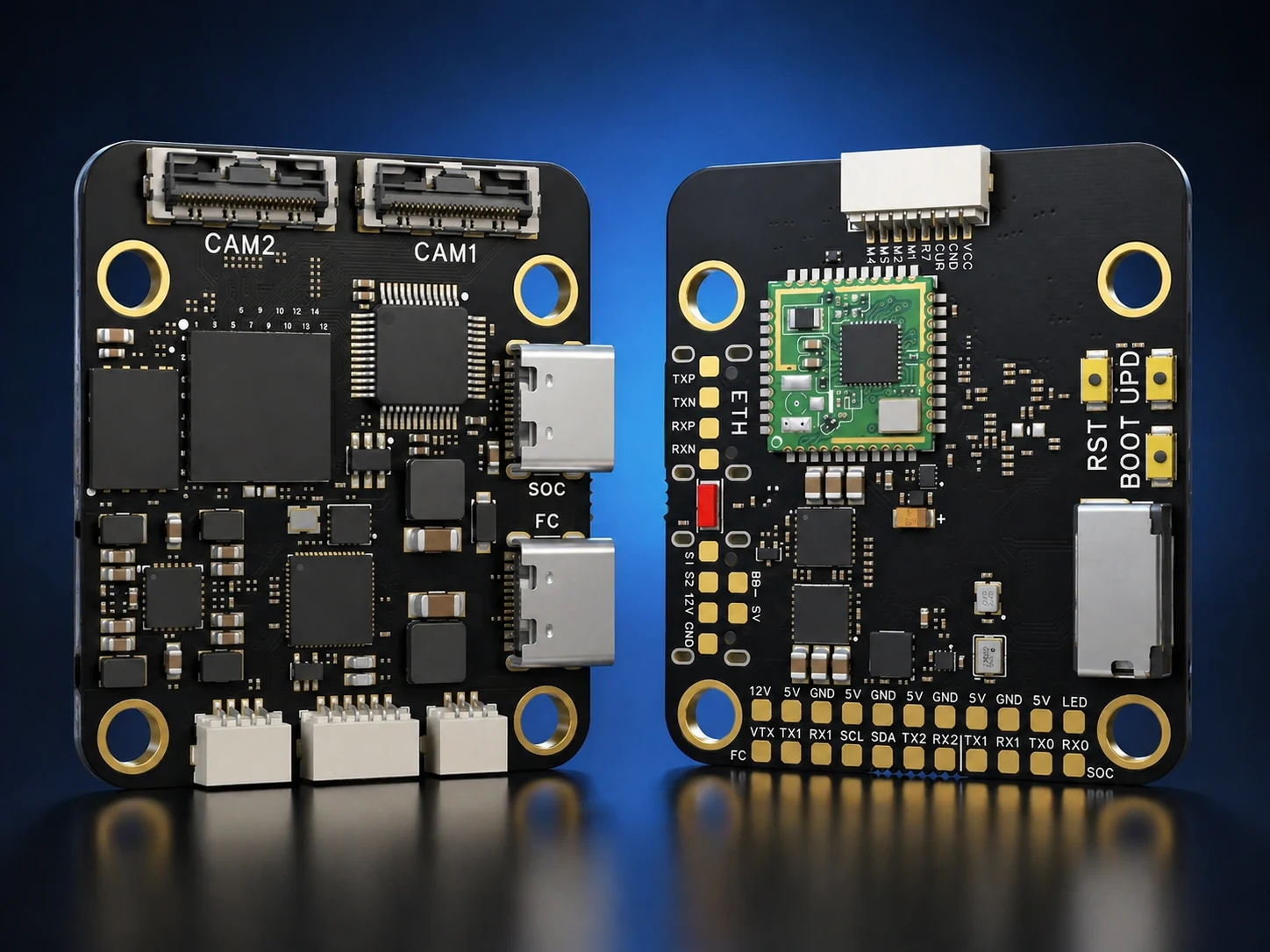
Modern UAV and FPV platforms are no longer judged only by motor power, battery size or maximum speed. As aircraft designs become more complex, builders need to consider flight control, power distribution, telemetry and communication hardware as one connected system.
For UAV developers, FPV builders and OEM partners, clean hardware planning can reduce wiring problems, improve reliability and leave space for future upgrades.
Flight Control Is the System Centre
The flight controller is often described as the brain of the drone. In practical hardware integration, it is also the centre where sensors, ESC signals, receiver input, telemetry feedback and external modules come together.
This means flight controller selection should not be based only on the processor model. Interface layout, firmware support, ESC telemetry, OSD support, receiver compatibility and wiring convenience all matter.
JetLancer AI provides flight controller hardware for FPV builders, UAV developers and OEM integration projects. Depending on the product model, JetLancer flight controllers support practical integration features such as ESC telemetry, OSD, DJI Air Unit plug support, Bluetooth configuration and multiple interface connections.
For customers building more advanced UAV platforms, these details can directly affect installation quality and long-term reliability.
Power Distribution Supports the Whole Aircraft
A stable flight controller still needs a stable power system behind it. Many UAV issues are not caused by the controller alone, but by voltage drops, electrical noise, poor wiring or mismatched ESC and PDB selection.
The ESC handles motor output, while the PDB and regulated power outputs support the flight controller, receiver, video equipment, GPS, telemetry modules and other onboard electronics.
A PDB should not be selected only by aircraft size. It should be chosen according to voltage, current, wiring layout, regulated outputs and stack integration requirements.
JetLancer AI provides ESCs, PDBs and related drone components for different FPV and UAV build requirements. For higher-power platforms, correct matching between the ESC, PDB and flight controller helps create a cleaner and more reliable system.
Data-Link Planning Should Start Early
Telemetry, video transmission and data-link modules are becoming more important in UAV platform planning. They affect not only signal performance, but also interface usage, power capacity, antenna placement and physical installation space.
JetLancer AI has begun limited project-based supply and integration support for selected data-link related modules, while the full product line is still being prepared.
This wording is important: data-link support is already moving forward in selected projects, but it should not be presented as a fully launched product category yet.
For OEM partners and UAV developers, the practical point is clear. If a platform may require additional communication hardware later, it is better to reserve interface resources, power capacity and mounting space during early design.
Built for Practical Hardware Integration
A reliable UAV is not created by one powerful component. It comes from correct matching between flight control, ESC output, power distribution, communication planning and physical layout.
JetLancer AI supports FPV builders, UAV developers, system integrators and OEM partners with flight controllers, ESCs, PDBs, related drone components and selected early-stage data-link integration support.
Contact JetLancer AI to discuss flight controller selection, ESC and PDB matching, FPV component supply, data-link planning and OEM UAV hardware integration requirements.
Interested in AI FC Integration?
Contact us for OEM pricing and technical documentation.
Get in Touch