Inside the Drone's Brain: How Flight Control Algorithms Enable Intelligent Flight
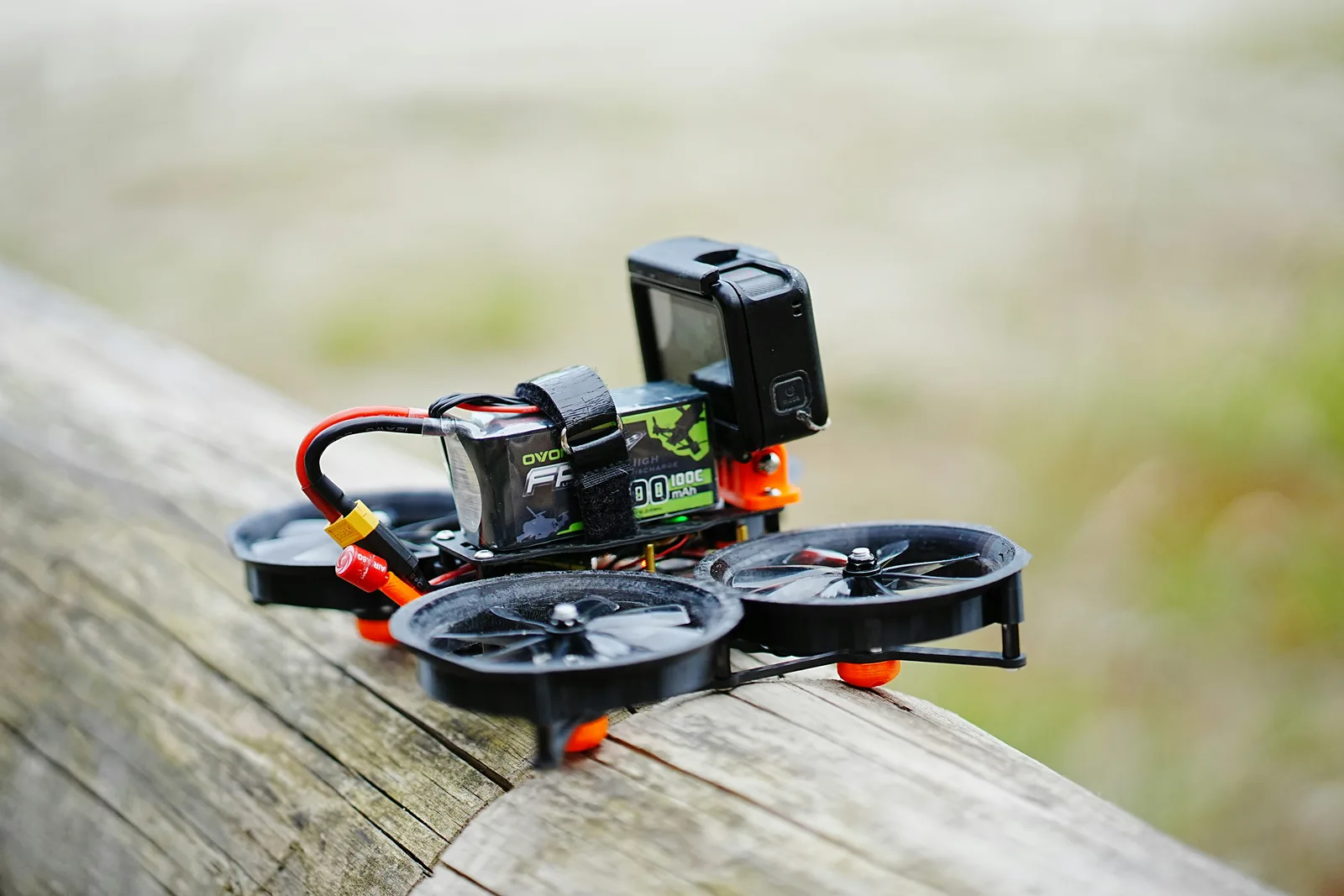
Modern drones are far more than flying machines with motors and propellers. Behind every smooth hover, accurate turn and stable flight path is a highly coordinated flight control system.
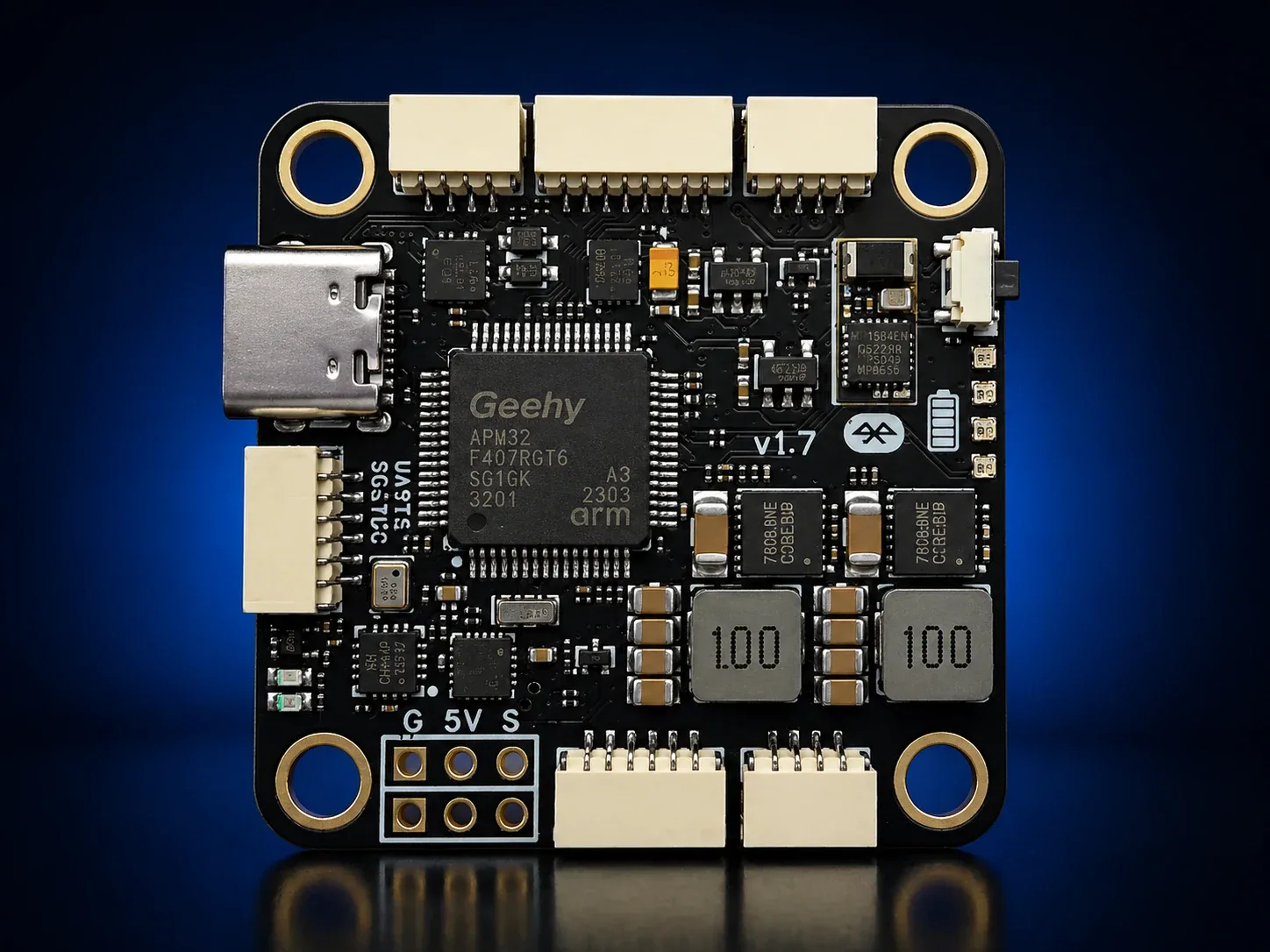
At the centre of this system is the flight controller. It acts as the drone’s brain, continuously reading sensor data, calculating the aircraft’s state and sending precise control commands to the motors or actuators.
For drone manufacturers, developers and system integrators, understanding flight control algorithms is essential. These algorithms determine whether a drone flies smoothly, responds quickly, adapts to changing conditions and performs reliably across different applications.
Layer One: Sensing the World
Before a drone can control itself, it must first understand its own state.
A flight controller receives data from multiple sensors, including the IMU, GPS, barometer and magnetometer. Each sensor provides useful information, but none of them is perfect. IMU data can drift over time. GPS signals may be delayed or unstable. Magnetic readings can be affected by interference.
This is why sensor fusion is one of the most important parts of flight control software.
Using algorithms such as Kalman filtering, the flight controller combines different sensor inputs to estimate the drone’s position, attitude, speed and movement more accurately. It continuously predicts the aircraft’s state, compares that prediction with new sensor data and calculates the most reliable result.
This stable state estimation becomes the foundation for every flight action that follows.
Layer Two: Maintaining Stability
Once the drone understands its attitude and movement, it needs to respond immediately.
The most fundamental control task is attitude control. This is what allows the aircraft to remain level, resist wind disturbance and respond smoothly to pilot or system commands.
One of the most widely used methods is PID control, often arranged as a cascaded control structure.
Inner Loop: Angular Rate Control
The inner loop, usually the angular rate loop, responds at high speed to changes detected by the gyroscope. If the aircraft begins to rotate unexpectedly, the controller adjusts motor output to counter the disturbance.
This loop is responsible for damping vibration, improving responsiveness and giving the drone a more stable flight feel.
Outer Loop: Angle Control
The outer loop, usually the angle loop, controls the aircraft’s target attitude.
For example, when a command requests a 30-degree tilt, the outer loop calculates the difference between the current angle and the target angle, then sends a rate command to the inner loop.
This layered structure allows the drone to remain stable while still responding quickly and precisely.
Layer Three: Moving with Purpose
Stable attitude control makes higher-level movement possible.
When a multirotor drone needs to move to a specific position, it does not simply “push itself” forwards. Instead, the position control algorithm converts movement goals into attitude commands.
For example, if the drone needs to move forwards, the position controller calculates the distance and direction to the target point. It then asks the attitude controller to tilt the aircraft slightly forwards. As the aircraft tilts, part of the lift force becomes forward motion.
During the movement, the position controller continuously checks the remaining error and adjusts the command until the drone reaches the target position.
This shows an important principle of flight control: advanced movement is built on stable low-level control.
Layer Four: Different Aircraft, Different Strategies
Not all drones use the same control strategy. Different airframes require different algorithmic approaches.
Multirotor Drones
Multirotor drones rely on fast motor response and strong attitude stabilisation. Their control logic focuses on hover stability, manoeuvrability and disturbance rejection.
Fixed-Wing Aircraft
Fixed-wing aircraft depend on airflow over the wings and cannot normally hover. Their algorithms focus more on energy management, trajectory planning and coordinated control of surfaces such as the rudder, elevator and ailerons.
VTOL Fixed-Wing Aircraft
VTOL fixed-wing aircraft combine both worlds. They use multirotor-style control during take-off and landing, then transition to fixed-wing control during cruise. The transition phase is one of the most demanding parts of the control system.
Unmanned Helicopters
Unmanned helicopters have more complex mechanical structures and stronger coupling between control inputs. Their algorithms may require more detailed physical modelling and advanced control methods to achieve precise performance.
For manufacturers and developers, this means flight control is never a one-size-fits-all problem. The flight controller, firmware and tuning strategy must match the aircraft design and application scenario.
Why Flight Control Algorithms Matter
A well-designed flight control system directly affects the performance and reliability of a drone.
It influences:
· Flight stability
· Response speed
· Vibration resistance
· Positioning accuracy
· Payload adaptability
· Wind resistance
· System reliability
· User experience
This is why the flight controller is one of the most important components in any drone platform. It is not only a hardware board. It is the core system that connects sensors, firmware, motors, power management and aircraft behaviour.
JetLancer AI and Intelligent Flight Control
JetLancer AI provides flight controllers and drone components for manufacturers, developers and system integrators who need reliable hardware for advanced drone platforms.
As drone applications become more diverse, flight control systems must support more than basic stabilisation. They need stronger sensor integration, broader compatibility and better adaptability across different airframes.
JetLancer AI focuses on flight controller hardware, drone component solutions and intelligent flight control integration. For partners building FPV platforms, industrial drones or autonomous systems, we support product selection, component supply, OEM cooperation and customised integration requirements.
Conclusion
Sensor fusion, PID control, position control and aircraft-specific strategies all work together inside the flight controller. These layers turn sensor data, firmware logic and hardware response into reliable flight performance.
For JetLancer AI, the flight controller is not just another drone component. It is the foundation of smarter, more reliable and more capable drone platforms.
Contact JetLancer AI to learn more about flight controller solutions, drone components and OEM integration support.
Interested in AI FC Integration?
Contact us for OEM pricing and technical documentation.
Get in Touch