Why AI FC Matters in Modern UAV Hardware Integration
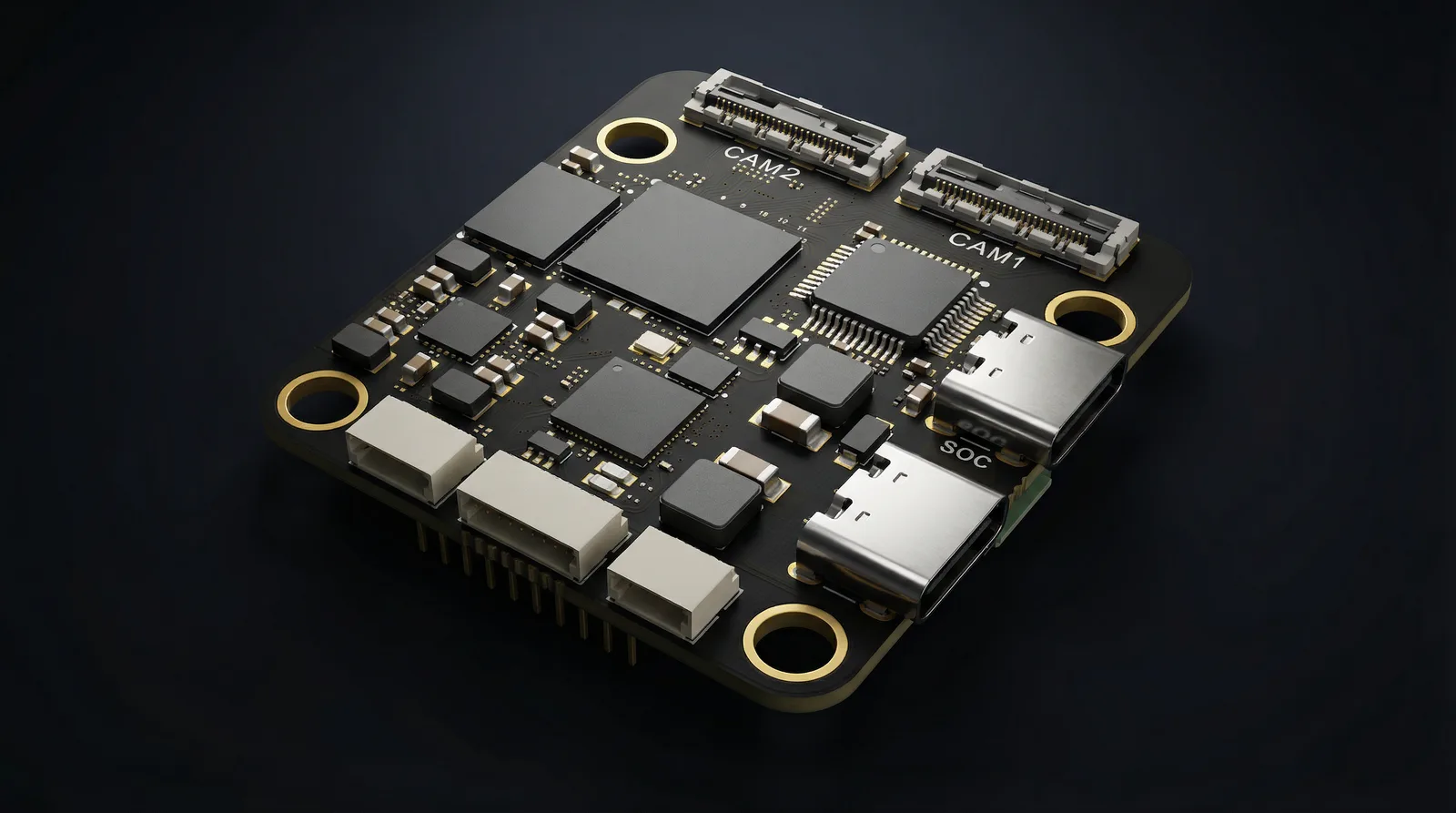
AI is becoming an important direction in the drone industry. More UAV platforms are now being designed with onboard vision, real-time data processing and closer integration between sensing and flight control.
For drone builders, this does not make traditional hardware less important. It makes hardware matching more important. As AI functions become part of the aircraft, the flight controller, camera input, ESC, PDB, receiver protocol and communication layout all need to work together cleanly.
For JetLancer AI, this is where AI FC becomes practical: not as a vague concept, but as a real hardware integration requirement.
From Stabilisation to AI-Assisted Flight Control
A traditional flight controller is mainly responsible for stabilising the aircraft, processing sensor data and translating control input into motor or servo output. This remains the foundation of every reliable UAV platform.
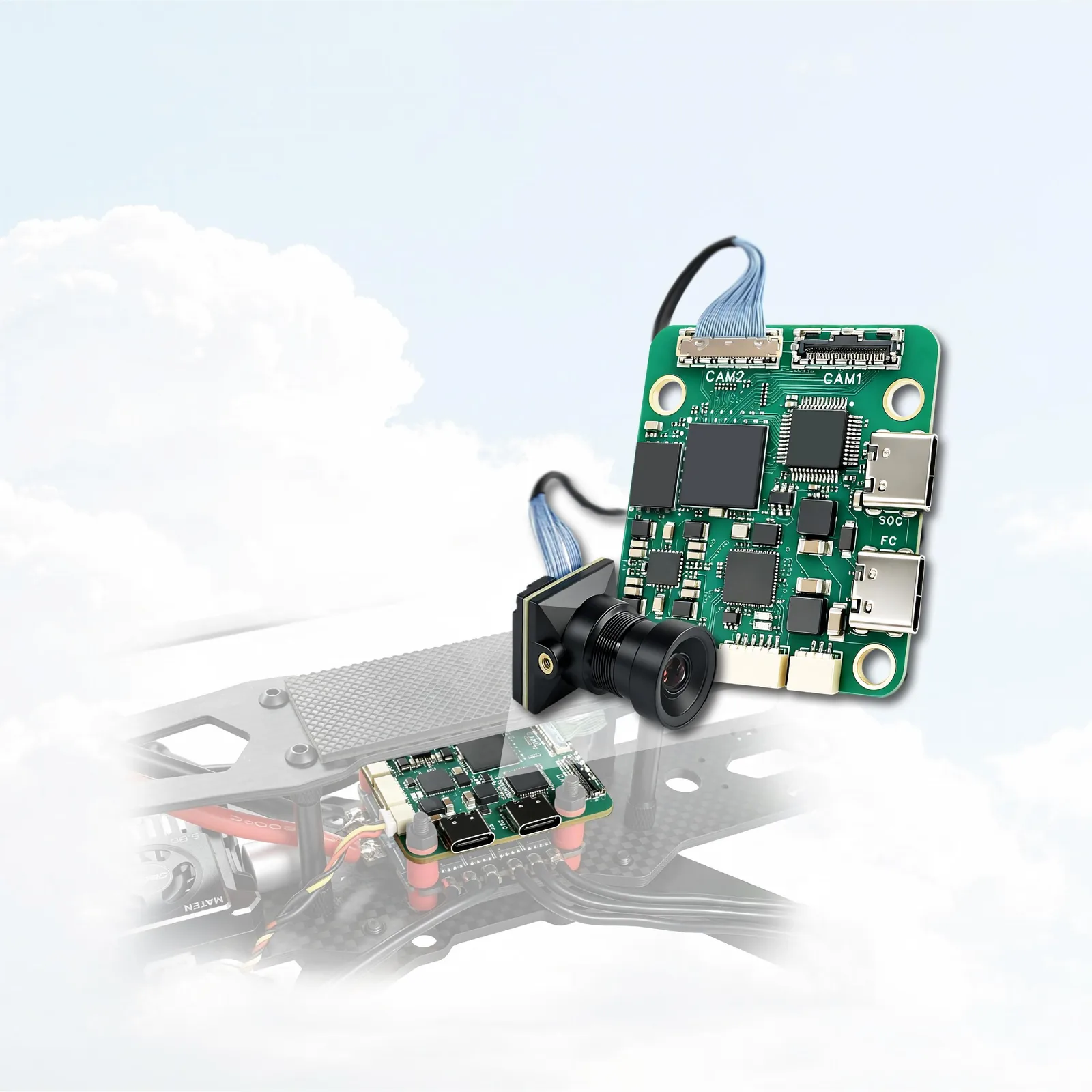
JetLancer AI FC adds another layer. It supports onboard vision input, AI-assisted visual lock modes, wireless data transmission and closer coordination between sensing and flight control.
This is especially relevant for FPV platforms, UAV development projects and OEM applications where space, weight and wiring are limited.
[Image 2: JetLancer AI FC product image] JetLancer AI FC combines onboard vision input with practical flight-control connectivity.
Why Onboard Vision Matters
Drones often need fast local response during flight. Depending only on external processing or unstable communication links can create delay and integration complexity.
Onboard vision allows visual information to be processed closer to the aircraft system. When combined with flight control hardware, this can support more responsive visual workflows and cleaner system integration.
For real UAV projects, the value is not only the AI algorithm. It is also the hardware design behind it: camera compatibility, processing capability, firmware support, receiver protocol, ESC protocol, power input and installation layout.
JetLancer AI FC for Practical Integration
JetLancer AI FC is designed as an AI-integrated flight control core for high-performance UAV and FPV platforms. AI FC combines AI-assisted flight control functions with practical hardware connectivity.
Key integration features include:
- Dual camera input support
- 1080P digital camera compatibility
- AI-assisted lock modes for supported visual workflows
- ELRS(CRSF) receiver protocol
- Wireless data transmission support
- DSHOT 300/600 ESC protocol
- Two-channel PWM servo signal output
- 4S-8S LiPo input
- Compact 10 g hardware design
These features make AI FC suitable for customers who need more than a standard flight controller. It is built for projects where flight control, vision input and communication planning need to be considered together.
[Image 3: JetLancer ESC or PDB product image] Reliable AI FC integration also depends on correct ESC and power distribution matching.
Hardware Matching Still Decides Reliability
AI capability alone does not make a drone reliable. The surrounding hardware must also be selected correctly.
The ESC needs to match the aircraft size, motor output and power requirements. The PDB needs to support stable voltage, current, BEC output and clean wiring. The communication layout needs enough interface resources and installation space.
JetLancer AI provides flight controllers, ESCs, PDBs and related drone components for different build requirements. For FPV builders, UAV developers and OEM partners, the real value is system-level hardware matching.
A Practical Direction for OEM Partners
AI FC is becoming popular because UAV customers want aircraft that can support more advanced sensing and response functions. For manufacturers and integrators, the challenge is not only the algorithm. The challenge is turning AI capability into reliable hardware integration.
That requires careful planning around the flight controller, camera input, ESC signal, power distribution, receiver protocol, data transmission and physical installation.
[Image 4: OEM integration, testing bench, wiring layout or communication module image] OEM UAV integration requires planning around interfaces, power, data transmission and installation space.
JetLancer AI supports OEM partners with AI FC hardware, drone component supply and integration discussions based on real project requirements.
As UAV platforms become smarter, the flight controller is no longer just one component in the stack. It is becoming the centre where sensing, control, power and communication come together.
Contact JetLancer AI to discuss AI FC integration, ESC and PDB matching, FPV component supply and OEM UAV hardware requirements.
Interested in AI FC Integration?
Contact us for OEM pricing and technical documentation.
Get in Touch